
- Kao Life-in-Harmony Foundation
- What We Do
- Program RAIN
- Program RAIN 2025

We installed new GAMA-Rain Filter rainwater harvesting systems (GRF systems)* and also repaired existing ones, covering a total of 18 locations. In addition, in collaboration with local partners, we conducted a hygiene education program to raise sanitation awareness among villagers.
-
*A GRF system is a rainwater filtration and harvesting system that operates without electricity, using three simple filters. It enables sustainable water use in areas where access to clean water is limited.
2025 Progress Update
Full-scale development of a model for rainwater utilization
In 2025, we conducted on-site fieldwork and deployed drones to survey the entire village of Girimulyo (approximately 1,500 households and around 60 public facilities). As a result, we identified multiple households and public facilities that lacked adequate water sources or storage equipment. Taking into account factors such as household income, the condition and proximity of nearby storage facilities, access to running water, and support from relatives, we held extensive discussions with local stakeholders and examined candidate locations for future support. Our aim was to ensure that assistance would be perceived as fair and acceptable across the village.

Drone survey in Girimulyo
(Panggang, Gunung Kidul Regency, Special Region of Yogyakarta, Indonesia)
Installation of rainwater harvesting systems (GRF systems)
Based on the survey findings, we installed GRF systems at 18 locations identified as priority areas for support. We determined the optimal equipment specifications for each location and carried out the installations in cooperation with local residents.
As a result, approximately 1,000 people are expected to benefit from improved access to water for daily use.
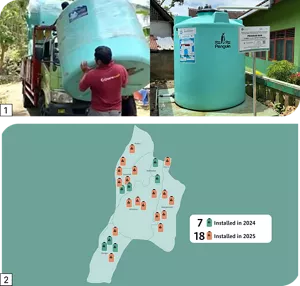
Photo 1: Installation of a GRF rainwater harvesting system
Photo 2: GRF systems installed in Girimulyo Village to date
Revisiting 2024 support locations
Together with our local partner GIB, we visited households where GRF systems were installed last year and confirmed that they were operating without any issues. Residents expressed their appreciation, noting that the water is now clean and can be used with peace of mind.
User acceptance and impact research in 2025, one year after the GRF systems installation
(2:16)
Improvements in quality of life following the installation of GRF systems
We surveyed households that had GRF systems installed in 2024 to assess changes in daily life during both the rainy and dry seasons. During the rainy season, we confirmed that residents were able to use clean water for daily activities, leading to improvements in their living environment, particularly for laundry and bathing.
During the dry season, the frequency and cost of water purchases decreased, easing both the stress caused by water shortages and the burden on household finances. Consistent access to clean water indicates a significant improvement in residents’ quality of life.

Photo: A resident commented, “Because the water is clear and colorless, I can now do laundry with confidence, without worrying about discoloration.”
Expanding partnerships
After completing the installations, we also conducted a hygiene education program in cooperation with the local community health center, supported by Kao Indonesia, a partner that shares the vision of Program RAIN.
On the day of the event, the head of the Environment Division of Gunung Kidul Regency (representing the Regent), the mayor of Panggang, and the village head of Girimulyo were in attendance. A video message from the Director of Environmental Health at Indonesia’s Ministry of Health was also screened.
Through these efforts, awareness of Program RAIN increased beyond the previous year, creating opportunities to gain broad support from both within and beyond the region.

Photo: Alongside the installation of the GRF systems, we also conducted a hygiene education program as part of our awareness-raising efforts.
Future direction of activities
We began supporting Girimulyo in 2024 and are currently in discussions with the mayor of Panggang, where the village is located, to expand support across the municipality. Together with our local partner GIB and in collaboration with local government authorities, we will continue to develop a model that firmly integrates rainwater utilization into the fabric of everyday life.
Kao Life-in-Harmony Foundation
1-14-10 Nihonbashi Kayabacho, Chuo-ku, Tokyo
103-8210
- Kao Life-in-Harmony Foundation
- What We Do
- Program RAIN
- Program RAIN 2025